

How We Learned the Value of Money in Shōwa-Era Japan
You can tell children that money matters as often as you like, but the lesson may not sink in. How do you teach your children about money so they’re ready to manage it on their own?
I’d like to share a few ways we learned about money growing up in Japan during the Shōwa era. These were everyday lessons, and each family had its own way of teaching them.
Learning to Do the Math
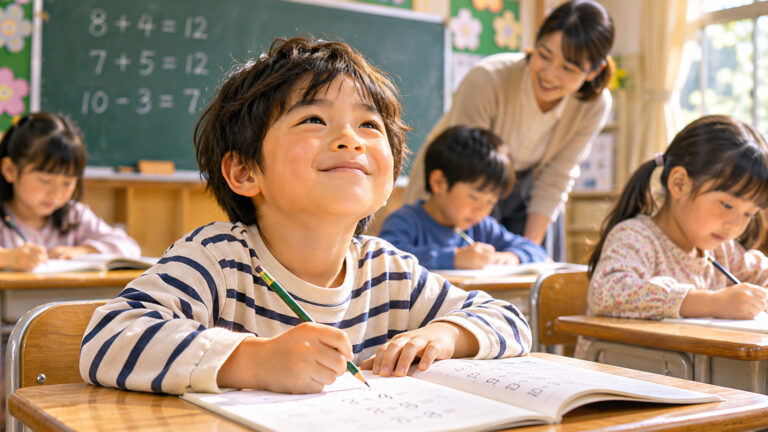
One handy thing about the Japanese yen is that everyday prices are given in whole yen. Children don’t have to do the kind of arithmetic with dollars and cents that they would encounter in the United States. Money often comes up in math problems in the early years of elementary school.
Taro takes ¥1,000 to a stationery shop. An eraser costs ¥100 and a pencil costs ¥50. If he buys one eraser and five pencils, how much change will he get?
Currencies work differently from country to country, so the same approach may take some adapting. Whole-yen prices give children in Japan a straightforward way to practice.
Planning How to Spend
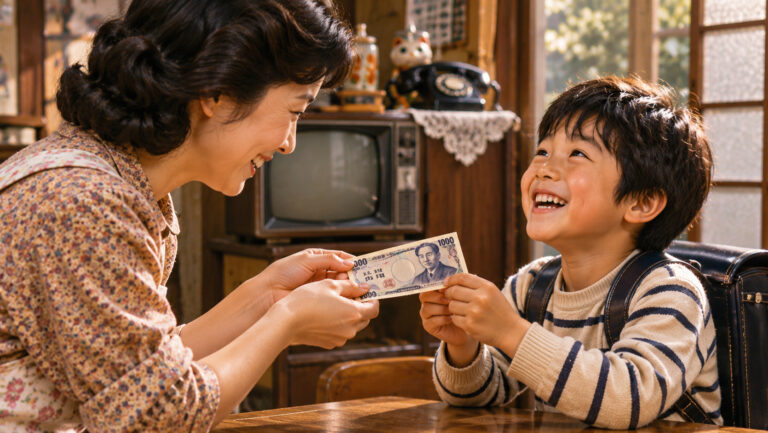
It was common to give children a fixed monthly allowance and let them figure out how to make it last. If you wanted to buy something, you had to work it into your budget.
Take a friend’s birthday present. That had to come out of your allowance, too. If several friends had birthdays in the same month, you might need to start setting money aside the month before.
I started getting a monthly allowance in first grade. I was given ¥1,000 and told to make it last. Before that, I would get a ¥100 coin when I went out to buy snacks with friends. I was thrilled to get a banknote after always getting coins. It took me years to realize that getting a ¥100 coin every day would have added up to more.
Earning Money by Helping Out
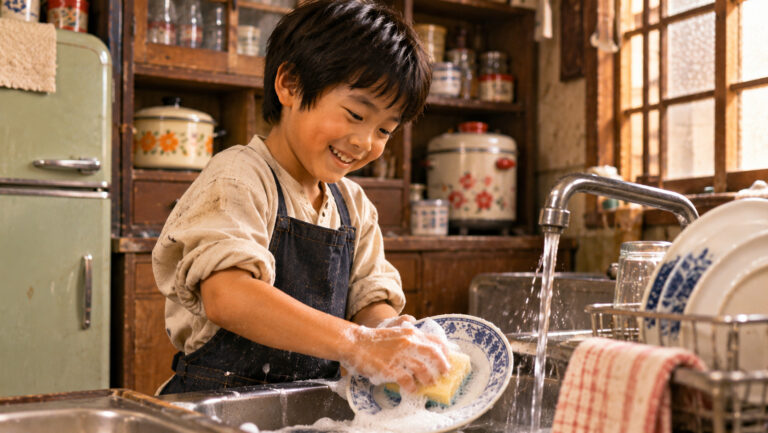
Often, the allowance was deliberately set a little below what you needed. If you came up short, you could earn the difference by doing some work.
When I was told I could keep the change if I did the shopping, I was happy to help. Washing the dishes or giving Dad a massage were other ways to learn what it meant to earn money.
Studying Was Part of the Job
Studying hard was part of a child’s job. If your grades improved, your allowance could go up. If you weren’t putting in the effort, it stayed the same. If there was something you wanted, you learned that you had to work for it.
When grades are low, help children work through what they don’t understand and recognize the effort they’re already making. That kind of support can keep them motivated.
Effort matters. As children get older, they also need to learn how to turn effort into results. One of the harder lessons of working life is that effort alone can go unrecognized and may be hard to turn into income. You can start by recognizing how hard children try, then gradually help them see why results matter, too. It’s a difficult balance to strike, but it’s worth getting right.
If you spend without a plan, your money can run out. Earning it takes work. And there’s real satisfaction in spending money you worked hard for. That’s something children can learn to enjoy, too.
That’s how we learned about money in Japan, through the things we did every day. How did you learn the value of money?
ABE KENGO
-
 Japan is an earthquake-prone country. What are the world’s top measures?
-
 The connection between cherry blossoms and death. The aesthetics of decay
-
 “Crazy Love” born in Japan: The finger cut promise
-
 What did the emperor of Japan say on 15 August?
-
 The most peaceful and mysterious period in history. What is the Jomon period?
-
 Kotodama (the spirit of words). Will believers be saved?