Can Fujitsu Challenge NVIDIA?
Much of the fast-growing AI industry runs on GPUs made by NVIDIA. Hardware that was once best known for rendering video games became central to training AI models, turning the American chipmaker into one of the world’s most powerful technology companies. Could an upcoming chip from Japan give some AI workloads a different option?
Japan once led the world in semiconductors. Its share declined after the 1980s, amid trade tensions with the United States and changes in the industry. Samsung in South Korea and TSMC in Taiwan grew into major players. In Japan, Fujitsu kept developing high-performance processors, and its approach starts with the CPU.
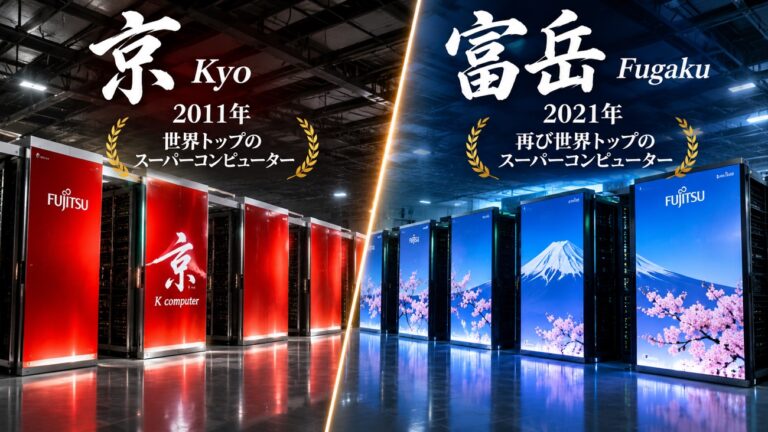
Fujitsu helped build the K computer, which topped the TOP500 supercomputer ranking in 2011. Its successor, Fugaku, first took the top spot in 2020. Both relied on CPUs for their computing power. That gave Fujitsu experience in making large numbers of CPU cores work together efficiently.
GPUs are good at running many similar calculations in parallel, which is one reason they became so important for AI training. Fujitsu is exploring how much of that work a CPU-based system can handle. It has announced plans to release its Arm-based MONAKA server processor in 2027, with power efficiency among its design goals.
Why does power matter? When you ask an AI service a question, servers have to process it and send back an answer. The servers need electricity, and the data center has to remove the heat they generate. As demand grows, both computing and cooling become harder to scale.
If processors can do more work for each unit of electricity they consume, data centers can serve more users within the same power budget. Whether MONAKA delivers that benefit will depend on the workload, the software and how it performs in real deployments. Even a shift in some workloads would give customers more choices and challenge the assumption that every AI job needs a GPU.
I imagine the Fujitsu engineers spent years at this while people were already writing off Japan’s semiconductor industry. Their work brings to mind a Japanese saying: “If you act, you can make it happen. If you do nothing, nothing will happen.”
After decades of setbacks, that persistence may be about to pay off. What do you make of Fujitsu’s approach?
ABE KENGO